
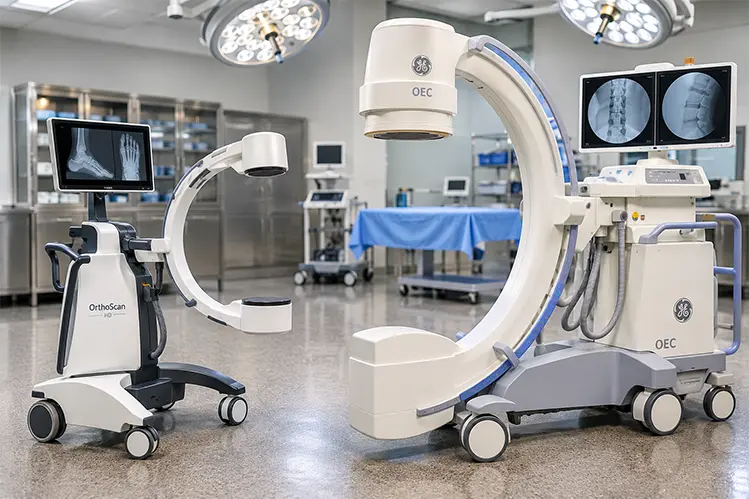
When choosing medical imaging equipment for a surgical center, hospital, or private practice, selecting the right C-Arm can make a significant difference in workflow efficiency, imaging capabilities, and overall operating costs.
Two common options are Mini C-Arms and full-size C-Arms. Although both provide real-time X-ray imaging through fluoroscopy, they are designed for different clinical applications.
Understanding their differences can help healthcare facilities make informed purchasing decisions, avoid unnecessary expenses, and select equipment that supports their specific procedures.
What Is a Mini C-Arm?
A Mini C-Arm is a compact fluoroscopy system primarily designed to image smaller anatomical structures, particularly the hands, wrists, feet, and ankles.
These systems are commonly used in orthopedic practices, outpatient clinics, and surgical centers where detailed imaging of the extremities is required.
Because Mini C-Arms are smaller and generally easier to maneuver than full-size systems, they can be especially useful in facilities with limited space.
Common applications for Mini C-Arms
- Hand and wrist fracture evaluation and treatment
- Foot and ankle procedures
- Small-joint imaging
- Orthopedic hardware placement in extremities
- Follow-up evaluations during certain orthopedic procedures
Mini C-Arms can offer convenient imaging for these applications without requiring the larger footprint of a traditional surgical C-Arm.
What Is a Full-Size C-Arm?
A full-size C-Arm is a mobile fluoroscopy system designed to support a broader range of surgical and interventional procedures.
These systems feature a larger C-shaped gantry that allows the X-ray source and detector to be positioned around the patient, providing real-time imaging during procedures.
Full-size C-Arms are frequently used in hospitals, ambulatory surgery centers, and specialized medical facilities.
Common applications for full-size C-Arms
- Orthopedic surgery and fracture repair
- Spine surgery and pain management procedures
- Vascular interventions
- Trauma procedures
- Certain urological procedures
- Surgical implant and hardware placement
Models such as the GE OEC 9800, GE OEC 9900, and other advanced mobile C-Arm systems provide imaging capabilities for a wide variety of clinical needs.
Mini C-Arm vs. Full-Size C-Arm: Key Differences
While both systems use fluoroscopy, several important differences can influence which option is best for your facility.
| Feature | Mini C-Arm | Full-Size C-Arm |
| Primary applications | Extremity imaging | Broad surgical applications |
| Equipment size | Compact | Larger |
| Portability | Generally easier to move | Requires more maneuvering space |
| Imaging area | Smaller anatomical regions | Larger anatomical regions |
| Typical facilities | Orthopedic clinics, outpatient centers | Hospitals, surgical centers |
| Purchase cost | Generally lower | Generally higher |
| Radiation exposure | Often lower for comparable extremity tasks | Varies by procedure and settings |
Actual imaging performance, radiation exposure, and operating requirements depend on the specific equipment model and clinical application.
- Imaging Capabilities and Clinical Applications
One of the most significant differences between Mini C-Arms and full-size C-Arms is the range of procedures each system can support.
Mini C-Arms are designed primarily for extremity imaging. Their compact design makes them useful for procedures involving smaller bones and joints.
Full-size C-Arms provide greater flexibility for imaging larger anatomical regions and supporting more complex procedures.
For example, a medical practice focused primarily on hand and wrist procedures may find that a Mini C-Arm meets its needs. However, a surgical center performing spinal injections, hip procedures, or vascular interventions would generally require a full-size system.
The right choice depends on the procedures your facility performs today and those it expects to offer in the future.
- Space Requirements and Portability
Available space is another important consideration.
Mini C-Arms typically have a smaller footprint, making them convenient for orthopedic clinics, examination rooms, and outpatient environments.
Full-size C-Arms require more room for equipment positioning, movement around the surgical table, and safe operation.
Facilities considering a full-size system should evaluate door widths, room dimensions, electrical requirements, and available clearance before purchasing.
Proper planning helps ensure that the equipment can be delivered, installed, and operated without disrupting existing workflows.
- Equipment Costs and Long-Term Value
Budget considerations often influence the decision between a Mini C-Arm and a full-size C-Arm.
Mini C-Arms generally have a lower initial purchase price, although pricing varies significantly depending on the manufacturer, model, condition, and available features.
Full-size systems typically represent a larger investment but can support a wider range of procedures.
When evaluating costs, healthcare facilities should consider more than the initial purchase price.
Important factors include maintenance, replacement parts, service availability, staff training, and expected equipment utilization.
For facilities seeking to manage expenses, refurbished C-Arms can provide an alternative to purchasing new equipment while maintaining access to clinically appropriate imaging technology.
- Radiation Safety Considerations
Radiation safety is an important consideration for any fluoroscopy system.
Mini C-Arms often use lower radiation output than full-size systems because they are designed for smaller anatomical regions. However, actual radiation exposure depends on the equipment, imaging settings, patient positioning, and procedure.
Regardless of the system selected, healthcare facilities should follow established radiation protection practices.
These include minimizing unnecessary exposure, using appropriate shielding, maintaining equipment properly, and ensuring staff receive suitable training.
Both Mini C-Arms and full-size C-Arms should be operated according to manufacturer guidelines and applicable radiation safety requirements.
- Which C-Arm Is Right for Your Facility?
The best system depends on your clinical requirements, available space, and long-term plans.
Choose a Mini C-Arm if:
- Your practice primarily treats hands, wrists, feet, and ankles.
- You need compact equipment for a smaller clinical environment.
- You perform frequent extremity imaging.
- Your procedures do not require the broader capabilities of a full-size system.
Choose a Full-Size C-Arm if:
- Your facility performs a wide range of surgical procedures.
- You need imaging capabilities for the spine, hips, or larger anatomical regions.
- Your practice supports pain management or vascular interventions.
- You require greater flexibility for multiple surgical specialties.
Before purchasing, it’s important to review the technical specifications of individual models and confirm that they meet your facility’s clinical requirements.
Find the Right C-Arm with Quest Imaging Solutions
Whether you’re expanding an orthopedic practice, upgrading surgical imaging equipment, or opening a new outpatient facility, choosing the right C-Arm is an important investment.
Quest Imaging Solutions offers a selection of medical imaging equipment, including Mini C-Arms, full-size C-Arms, and refurbished systems from recognized manufacturers.
Our team can help you explore available equipment and identify options that align with your facility’s procedures, space requirements, and budget.
Looking for a Mini C-Arm or full-size C-Arm?
Contact Us to explore available equipment or to discuss your imaging needs.